Proper preparation is essential for a safe and enjoyable visit to Mount Fuji. Whether you plan to climb to the summit or explore the surrounding area, the sections below cover the most important aspects to consider before your trip.
Gear & Clothing
Weather conditions on Mount Fuji can change rapidly, even during the official climbing season. The items below are commonly used by hikers and visitors during their time on the mountain.
Compact and lightweight, with enough space for water, layers and food during a full day or overnight climb. The size is suitable for day hikes and summits attemps without carrying unnecessary weight.
View popular model on AmazonTemperatures near the summit can drop quickly and strong winds are common. A waterproof and windproof shell helps protect against rain, cold and sudden weather changes.
View most recommended jacket for men and for womenMany climbers start their ascent during the night to reach the summit for sunrise. A reliable headlamp keeps your hands free and improves visibility in dark conditions.
View popular headlamp on AmazonSturdy footwear with good grip is important due to loose volcanic gravel and uneven terrain. Trail shoes or light hiking boots are commonly used.
View best-selling trekkng shoes for men and for womenWell-cushioned hiking socks help prevent blisters and keep your feet dry during long ascents and descents on volcanic terrain.
View well-reviewed hiking socks on AmazonTemperatures near the summit can be low, especially during early morning hours. Gloves help keep your hands warm and protected from wind.
View frequently chosen model on AmazonA warm hat helps retain body heat at higher elevations, while a cap is useful for sun protection during daytime climbs.
View popular hat on AmazonAn insulated mid-layer, such as a fleece or light down jacket, provides warmth without adding too much weight to your backpack.
View commonly used model for men and for womenHiking poles can reduce strain on knees during steep descents and help maintain balance on loose volcanic gravel.
View frequently chosen model on AmazonThere are no trash bins on Mount Fuji hiking trails. A lightweight trash bag helps you carry out all waste, follow Leave No Trace principles, and keep the mountain clean.
Health & Safety
Altitude, fatigue and weather are the main risks when climbing Mount Fuji. Being prepared significantly reduces these risks.
- Ascend slowly and take breaks to acclimatize
- Stay hydrated and eat regularly
- Be aware of altitude sickness symptoms (headache, nausea, dizziness)
- Turn back if symptoms worsen
- Follow marked trails and instructions
- Carry a basic first aid kit - view frequently chosen on Amazon
- Check below emergency contact procedures before your climb:
Yoshida Route (Yamanashi)
| Organization | Contact |
|---|---|
| Mt. Fuji 5th Station General Management Center | 090-5190-0167 |
| Fujiyoshida Police Station Yamanashi Prefectural Police |
0555-22-0110 |
| Fujigoko Fire Department | 0555-22-0119 |
| National emergency number | 110 (Police) / 119 (Fire & Ambulance) |
Subashiri & Gotemba Routes
| Organization | Contact |
|---|---|
| Gotemba Police Station Shizuoka Prefectural Police |
0550-84-0110 |
| Gotemba Fire Station | 0550-83-0119 |
| National emergency number | 110 (Police) / 119 (Fire & Ambulance) |
Fujinomiya Route
| Organization | Contact |
|---|---|
| Fujinomiya Police Station Shizuoka Prefectural Police |
0544-23-0110 |
| Seasonal Police Box Mt. Fuji General Guidance Center |
090-2182-2239 |
| Emergency Response Center Fuji & Fujinomiya Fire Departments |
0545-55-2857 |
| National emergency number | 110 (Police) / 119 (Fire & Ambulance) |
Weather & Season
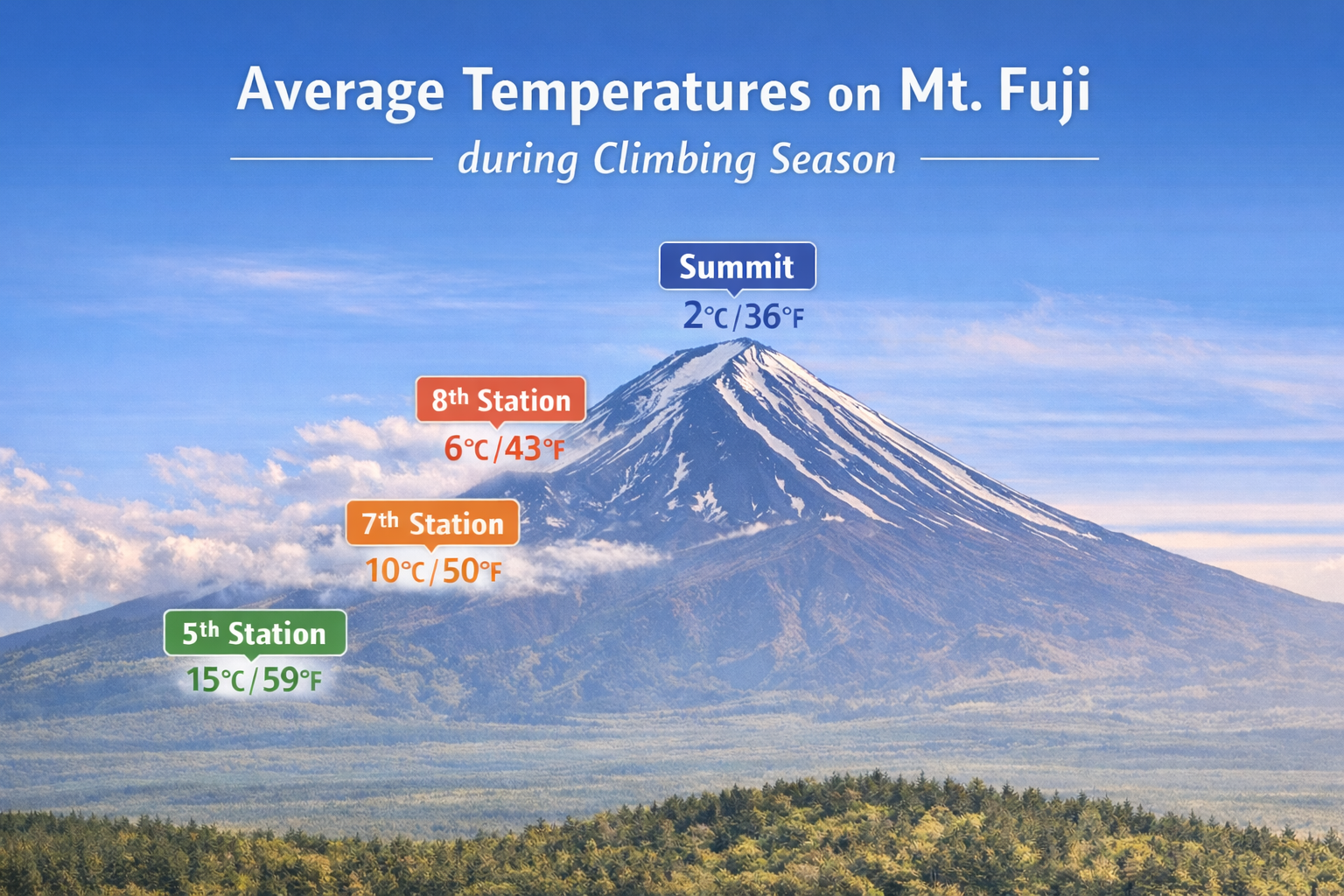
Mount Fuji’s weather can change rapidly, even during summer. Conditions at the summit are often very different from the base.
- Official climbing season: July to September
- Temperatures near the summit can drop below freezing
- Strong winds are common at higher elevations
- Check weather forecasts before departure
- Avoid climbing during storms or heavy rain
* Some links on this page may be affiliate links. This does not affect the price you pay.