The 4 trails to the summit of Mount Fuji
Mount Fuji has four official climbing routes, each offering a unique experience. All of them lead to the summit at 3,776 m, but they vary in difficulty, duration, and popularity. Below you can quickly compare them and find the route that best suits your experience level and goals.
Compare the Mount Fuji trails
| Route | Difficulty | Distance | Ascent time | Crowds | Best for |
|---|---|---|---|---|---|
| Yoshida | 🟢 Easy – Moderate | 6.8 km | 5–7 h | 👥 Busy | First-time climbers |
| Subashiri | 🟡 Moderate | 8 km | 6–8 h | 👣 Medium | Nature lovers |
| Fujinomiya | 🔴 Hard | 4.3 km | 4–6 h | 👣 Medium | Experienced hikers |
| Gotemba | ⚫ Very hard | 10.5 km | 7–10 h | 🌿 Quiet | Advanced climbers |
Yoshida trail
Most popular and beginner-friendly route with many mountain huts and facilities.
Read moreDetails per trail
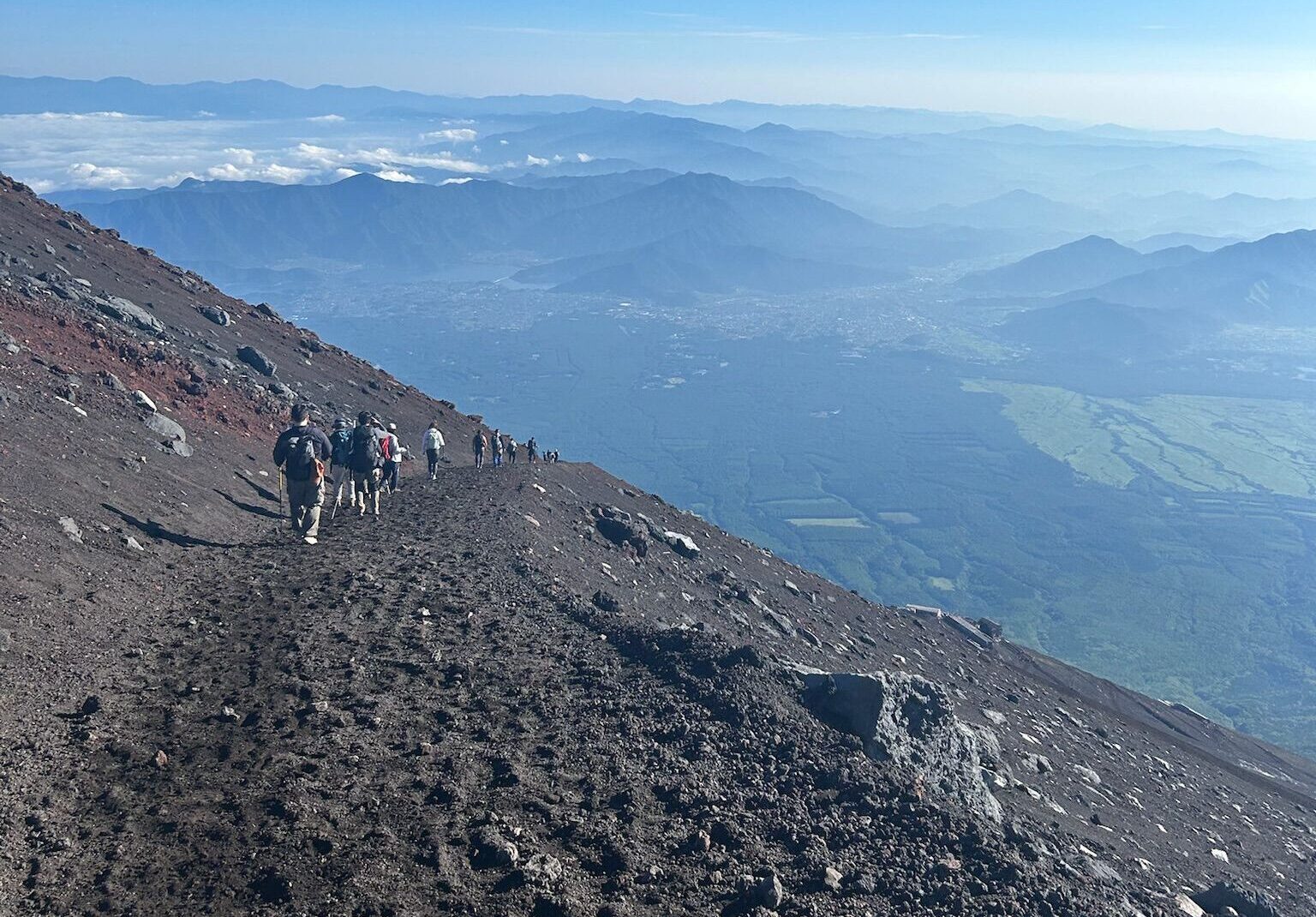
Yoshida trail
The Yoshida Trail is by far the most popular and accessible route to Mount Fuji’s summit. It’s well-maintained, clearly marked, and offers the best mountain hut infrastructure, ideal for first-time climbers. Many huts sell warm food, drinks, and souvenirs, and you can reserve a bed to rest overnight before the final ascent for sunrise (“Goraikō”).
The ascent and descent routes are separate, which helps manage crowd flow. Along the way, climbers can enjoy views of the Fuji Five Lakes region and, on clear days, even Tokyo’s skyline. However, it also means this trail gets very crowded during peak season (especially July–August
- Start: Fuji Subaru Line 5th Station
- Difficulty: Easy – Moderate
- Mountain huts: Many
- Best for: First-time climbers
- Challenges: Heavy congestion; Volcanic gravel makes the descent slippery
Subashiri trail
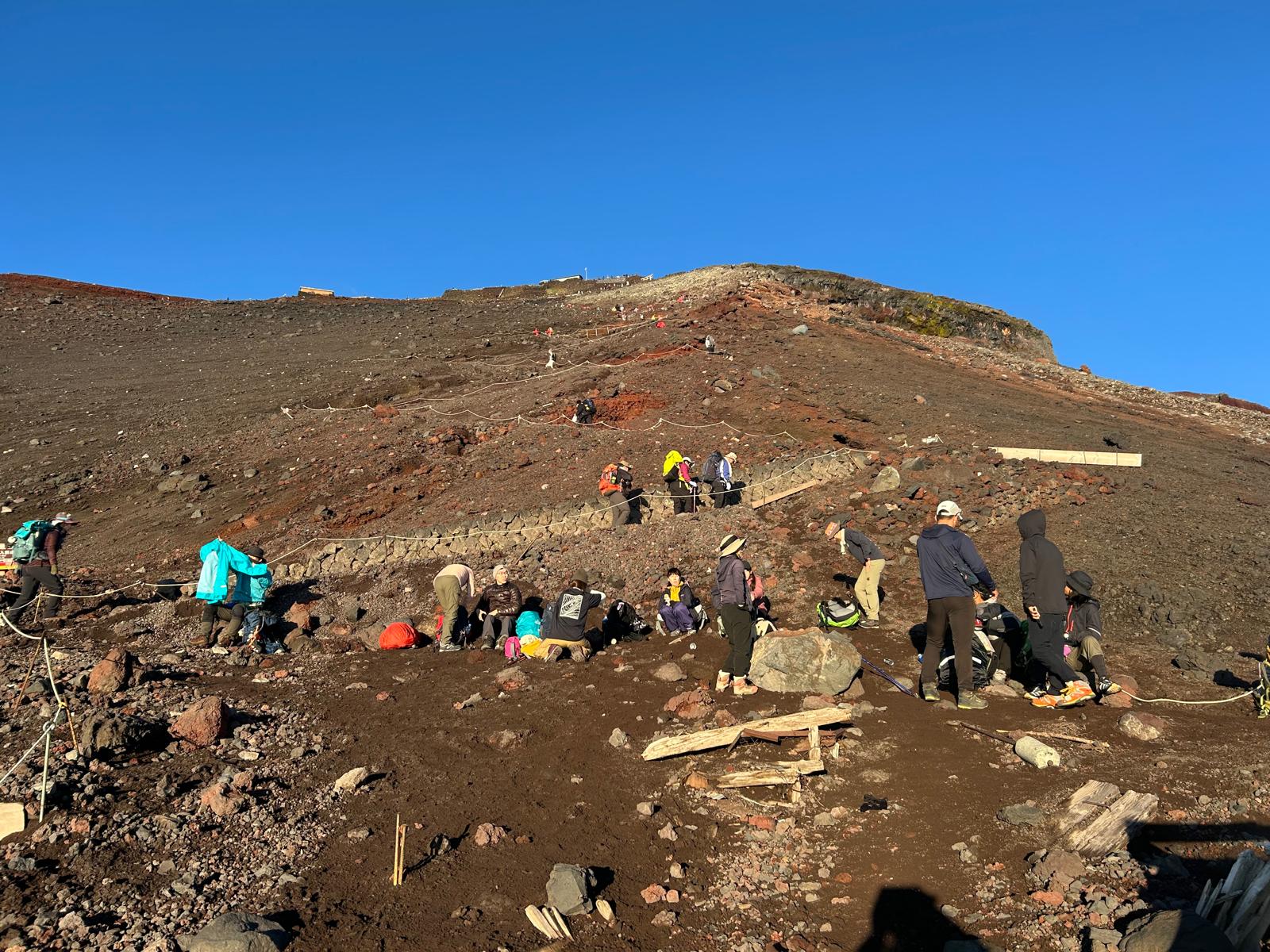
The Subashiri Trail begins in lush forest, offering a peaceful start with plenty of greenery — a contrast to the barren volcanic slopes higher up. It joins the Yoshida Trail around the 8th station, so the upper part can become busier.
The “Osunabashiri” (great sand run) on the descent is a highlight — climbers can literally run or slide down soft volcanic ash, which is fun and fast.
- Start: Subashiri 5th Station
- Difficulty: Moderate
- Mountain huts: Limited
- Best for: Intermediate climbers who prefer nature and fewer crowds
- Challenges: Lower visibility in foggy conditions (especially in the forest); Volcanic gravel makes the descent slippery
Fujinomiya trail
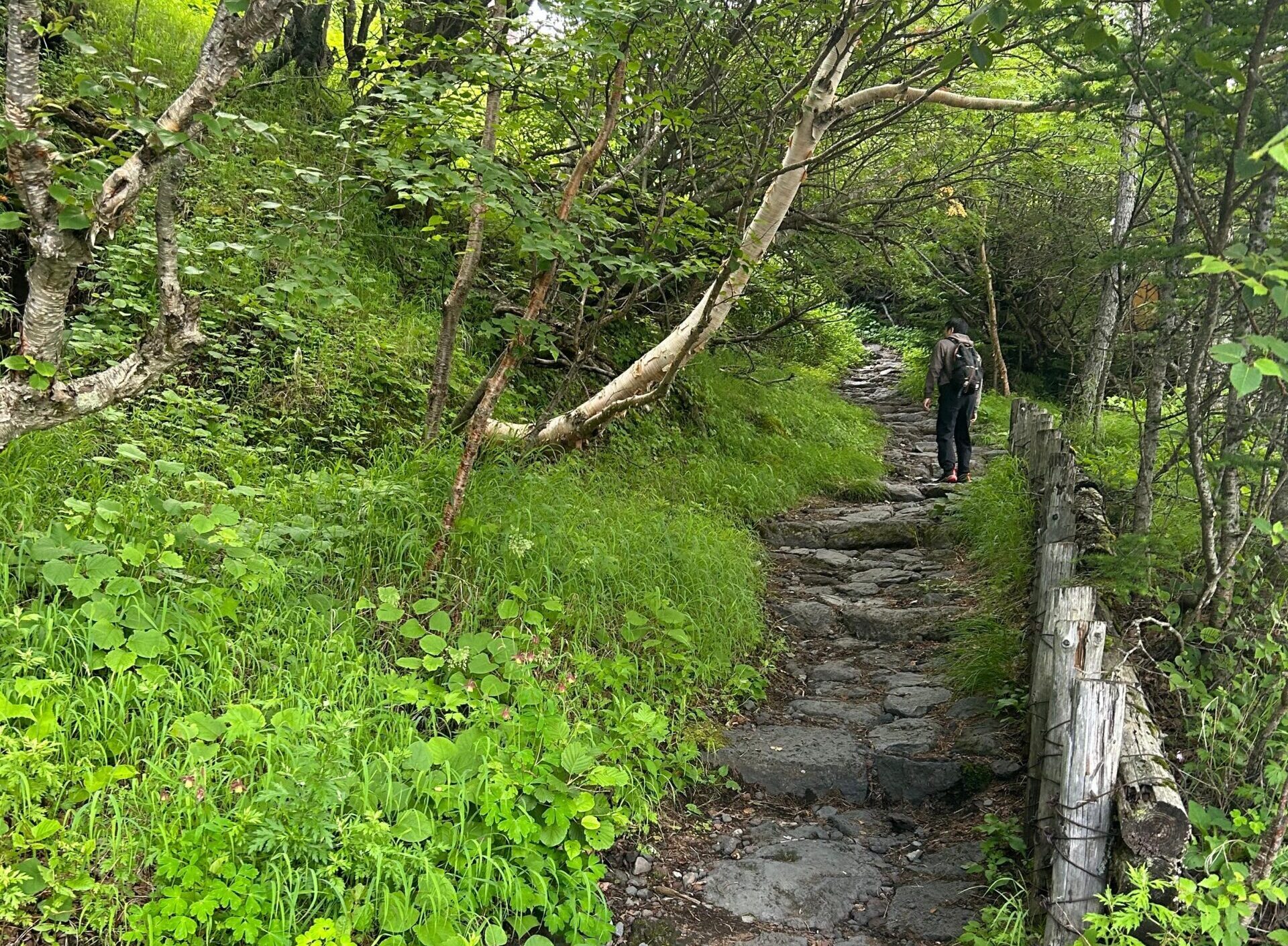
The Fujinomiya Trail is the shortest and steepest route to Mount Fuji’s summit. Because it starts at the highest elevation, it’s the fastest route overall, but the incline is quite steep. It’s the second most popular trail, with several huts and rest points along the way. It offers great views of Suruga Bay, and you can even see the Pacific Ocean on clear days.
Due to its rocky terrain and higher starting point, it is recommended for experienced hikers only.
- Start: Fujinomiya 5th Station
- Difficulty: Hard
- Mountain huts: Few
- Best for: Experienced climbers
- Challenges: Steep incline — not ideal for beginners; Ascent and descent share the same path, which can cause congestion slippery
Gotemba trail
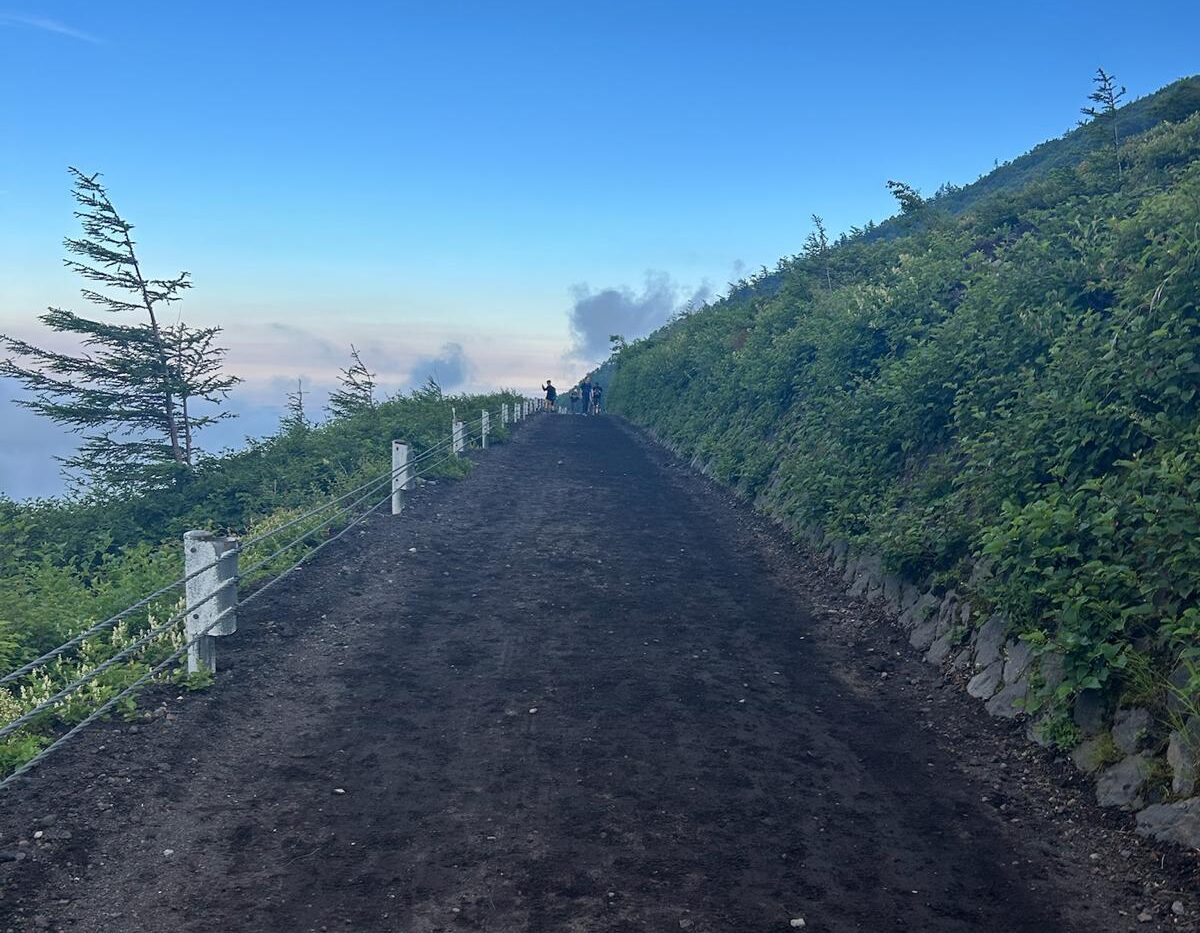
The Gotemba Trail is the longest and least crowded route to Mount Fuji’s summit. Starting from a much lower altitude, it has a huge elevation gain and few facilities, making it a true endurance challenge. The environment is wide open with little vegetation — mostly ash, sand, and rock — offering an almost lunar landscape. The descent is famous for the “Osunabashiri”, an even larger sand slope than on Subashiri, where climbers can descend quickly by sliding or jogging through the volcanic ash.
- Start: Gotemba 5th Station
- Difficulty: Very hard
- Mountain huts: Very few
- Best for: Advanced climbers
- Challenges: Very long route, not recommended for beginners; Few mountain huts or shelters
Tickets
Anyone wishing to climb Mt. Fuji must either book in advance or submit their personal information through an online registration system. This system is expected to open in or after April. Updates and the official notice will be posted on our website.
Please be aware that this registration only covers the mandatory hiking fee and does not include reservations for mountain huts.
The hiking fee is 4000 yen.