Mount Fuji Preparation Guide:
Gear, Safety & Weather for a Night Climb
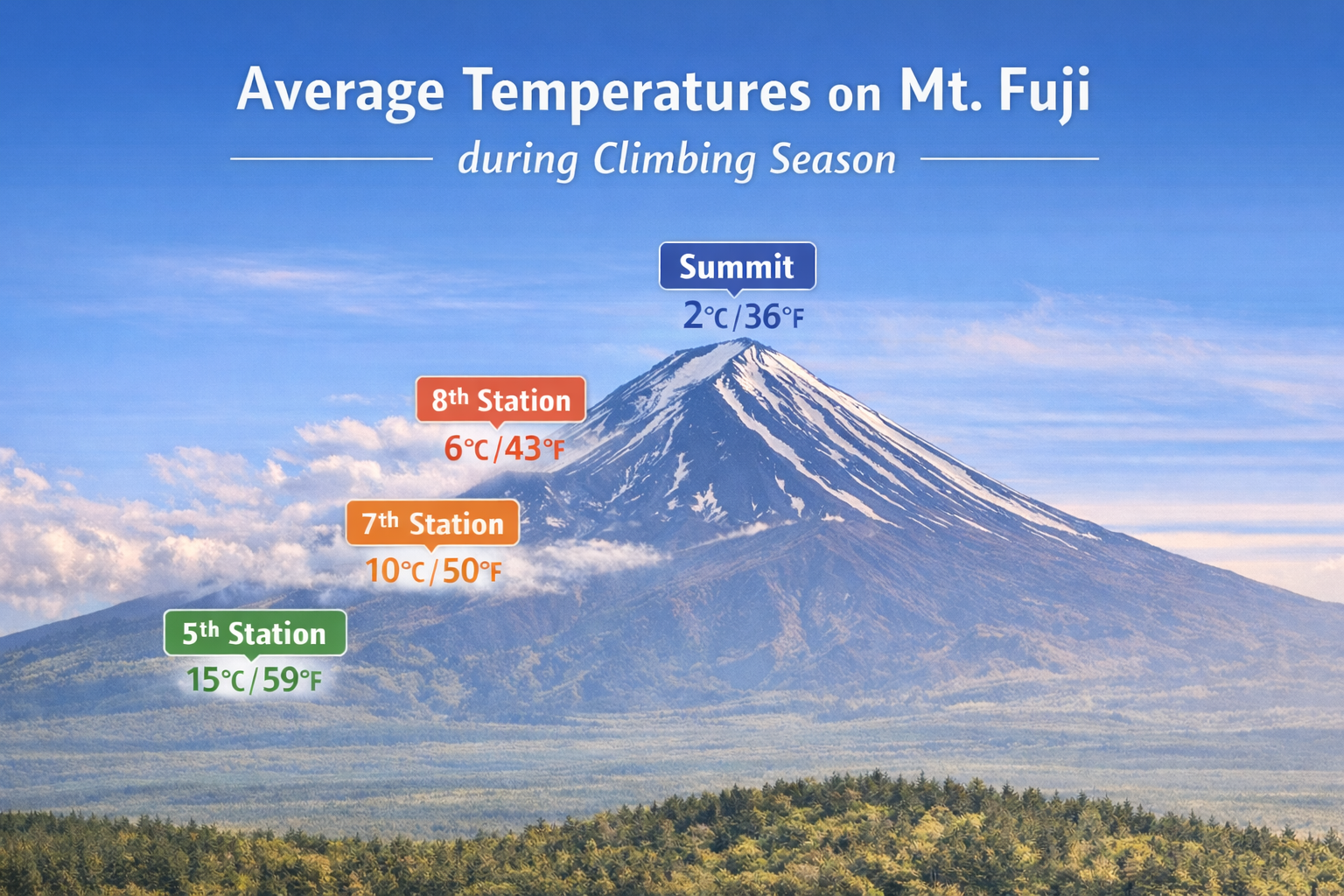
Proper preparation is the difference between a memorable summit and a miserable retreat. A night climb on Mount Fuji is demanding — temperatures can drop below freezing at the summit, weather changes within minutes, and altitude sickness is a real risk above 3,000 m. This guide covers everything you need: the right gear, health & safety tips, emergency contacts per trail, and a weather breakdown by month.
Gear & clothing for a night climb
The items below are essential for a safe and comfortable night climb on Mount Fuji. Items marked Must-have are non-negotiable — rangers can turn you back at the gate without these. Items marked Night climb are especially important for climbing in the dark.
Absolute must-have for night climbing. Keeps your hands free and is essential for safety on the dark trail. Bring spare batteries — cold temperatures drain them fast. Minimum 200 lumens recommended.
Rangers can refuse entry without proper footwear. You need ankle support and good grip on loose volcanic rock. No trail runners, no sneakers, no sandals. Break them in before the climb — at least 20–30 km of walking.
Temperatures at the summit drop below 0°C even in July. Strong winds are constant. A waterproof and windproof shell is non-negotiable. A rain poncho won't work — wind shreds them within minutes. Gore-Tex or equivalent recommended.
Compact and lightweight with enough space for water, layers, food and your headlamp. 20–30L is the ideal size — enough for a full overnight climb without carrying unnecessary weight up the mountain.
An insulated fleece or light down jacket to wear under your shell. Summit wind chill can feel like -10°C even in August. Layers are key — you'll warm up on the ascent and cool down fast when you stop at the top.
Significantly reduces knee strain on the long, loose descent. Can also be bought or rented as walking sticks at the 5th station shop, but sizes can be limited. Bringing your own is more reliable.
Especially important for night climbers — your hands get cold fast in the dark. Waterproof gloves or layered gloves (liner + shell) work best at high altitude.
A warm beanie retains body heat at the summit — essential for the long wait at the top before and during sunrise. A cap is useful for sun protection during the descent. Bring both if possible.
Well-cushioned hiking socks prevent blisters and keep your feet dry on the long ascent and descent. Merino wool socks regulate temperature well and reduce odour during a two-day climb.
* Some links on this page are affiliate links. This does not affect the price you pay.
Health & safety
Altitude, fatigue and weather are the main risks on Mount Fuji. Being well-prepared significantly reduces these risks.
The Japanese phrase means "slowly, slowly." It's the most important rule on Fuji. Most climbers go too fast and pay for it above the 8th station. Take breaks every 30 minutes even if you feel fine.
Drink at least 2 litres of water during the climb. Dehydration accelerates altitude sickness. Avoid alcohol the day before — it dehydrates you and increases altitude sickness risk.
Spending a night at the 7th or 8th station (2,700–3,100 m) lets your body acclimatize before the final push. This significantly reduces altitude sickness risk and improves your summit success rate.
If you have a severe headache, feel nauseous or dizzy, descend immediately. Do not push on — altitude sickness can become serious quickly. The summit will always be there for another attempt.
Fuji creates its own weather. Sunshine can turn to sideways sleet in 20 minutes. Check Windy.com or Tenki.jp before departure. Never climb in thunderstorm conditions — there is no shelter above the 8th station.
Include blister plasters, pain relief, antacid, and any personal medication. If you're prone to altitude sickness, consult your doctor about acetazolamide (Diamox) before your trip.
Emergency contacts per trail
Screenshot this page before you climb — mobile signal is unreliable above the 7th station.
| Organisation | Contact |
|---|---|
| Mt. Fuji 5th Station General Management Center | 090-5190-0167 |
| Fujiyoshida Police Station (Yamanashi Prefectural Police) | 0555-22-0110 |
| Fujigoko Fire Department | 0555-22-0119 |
| Organisation | Contact |
|---|---|
| Gotemba Police Station (Shizuoka Prefectural Police) | 0550-84-0110 |
| Gotemba Fire Station | 0550-83-0119 |
| Organisation | Contact |
|---|---|
| Fujinomiya Police Station (Shizuoka Prefectural Police) | 0544-23-0110 |
| Seasonal Police Box / Mt. Fuji General Guidance Center | 090-2182-2239 |
| Emergency Response Center (Fuji & Fujinomiya Fire Depts.) | 0545-55-2857 |
Weather & climbing season
Mount Fuji's weather changes rapidly — conditions at the summit are often drastically different from the base. The official climbing season runs from July 1 to September 10, 2026.
Check these weather tools before you climb:
Always check the evening before and make a go/no-go decision before boarding your bus. Mountain weather is never fully predictable — even a good forecast can change within hours.
Season just opened. Quieter trails, possible snow patches near the summit. Best period for avoiding crowds. Weather generally stable.
Peak season starts. Busiest period with school holidays. More stable weather but highest crowds. Book huts early.
Busiest time of year. Obon week is extremely crowded. Good weather but afternoon thunderstorms possible. Consider avoiding weekends.
Season closing. Significantly fewer climbers. Colder at the summit. Best balance of weather, visibility and crowd levels. Highly recommended.
Ready for the next step?
Book your mountain hut, plan your transport and choose your trail.